
Commercial Use Classes & Planning Permission - Essex & London
Discover which commercial changes of use need planning permission, how Class E works and when permitted development rights apply in England.
Commercial Use Classes Explained: When Do You Need Planning Permission to Change Use?
Changing the use of a commercial property can present opportunities for businesses, landlords and property developers. Whether you're considering converting a vacant shop into an office, opening a restaurant in an existing retail unit, or repurposing an industrial building, understanding the planning rules is an important first step.
In England, commercial properties are divided into different planning use classes, which determine how buildings and land can lawfully be used.
Some changes can be made without applying for planning permission, while others benefit from permitted development rights or require a full planning application.
In this guide, we explain the different commercial use classes, which changes of use are permitted without a planning application, and when planning permission is required. We also explore examples of commercial developments that Young & You has helped secure planning approval for.
What Are Commercial Use Classes?
The Town and Country Planning (Use Classes) Order 1987, as amended, categorises land and buildings according to their primary use.
These classifications help determine whether a proposed change in the use of a property constitutes development for planning purposes.
One of the most significant changes to the system came in September 2020, when the government introduced Use Class E – Commercial, Business and Service.
This consolidated several previously separate commercial uses into a single class, allowing greater flexibility for businesses to adapt existing premises.
However, not every commercial activity falls within Class E, and some changes of use remain subject to planning control.
Understanding the Different Commercial Use Classes
Class E – Commercial, Business and Service
Class E covers a broad range of commercial activities and is particularly relevant to high streets, town centres and established commercial premises.
It includes:
- E(a) – Retail: Shops selling goods, such as clothing shops, furniture retailers and convenience stores, other than shops falling within Class F2.
- E(b) – Restaurants and cafés: Premises selling food and drink primarily for consumption on the premises.
- E(c) – Financial and professional services: Banks, estate agents and other appropriate commercial services.
- E(d) – Indoor sport and fitness: Gyms, fitness studios and certain indoor recreational facilities.
- E(e) – Medical and health services: Medical centres, dental practices and other qualifying healthcare facilities.
- E(f) – Nurseries and day centres: Non-residential childcare and day facilities.
- E(g) – Offices, research and light industrial uses: Offices, research and development facilities, and industrial processes that can be carried out in a residential area without detriment to its amenity.
The benefit of Class E is the flexibility it provides.
For example, an existing Class E retail shop could generally be converted into an office, restaurant or gym without requiring a planning application for the change of use, provided there are no relevant restrictions.
Class B2 – General Industrial
Class B2 generally covers industrial processes that do not fall within the lighter industrial activities permitted under Class E(g).
This could include manufacturing, engineering or other industrial operations that may generate greater levels of noise, disturbance or activity.
Changing an existing commercial property into a general industrial use will commonly require planning permission where the existing use falls within another class.
Class B8 – Storage and Distribution
Class B8 covers premises used for storage and distribution purposes, including warehouses, storage facilities and distribution centres.
These activities can generate different planning considerations from other commercial uses, particularly regarding delivery vehicles, servicing requirements, operating hours and traffic movements.
Certain changes from industrial to storage use can be undertaken through permitted development rights, although restrictions apply.
Class F1 and F2 – Learning and Community Uses
Class F1 includes educational establishments, museums, libraries, places of worship and certain other non-residential institutions.
Class F2 relates to local community uses, including certain small shops providing essential goods, community meeting halls, outdoor recreational facilities and swimming pools.
These classes provide specific protections for community facilities. Changing such premises into conventional commercial uses will generally require planning permission.
Sui Generis – Uses Outside the Standard Classes
Some commercial activities do not fall within a conventional use class and are instead categorised as sui generis, meaning they are considered individually.
Examples include:
- Public houses, wine bars and drinking establishments
- Hot food takeaways
- Nightclubs
- Betting shops
- Casinos
- Petrol stations
- Cinemas
- Certain entertainment venues
Changes to or from these uses will often require planning permission, although specific permitted development rights provide exceptions.
The distinction can be particularly important for hospitality businesses. For example, a restaurant primarily serving food for consumption on the premises would typically fall within Class E(b), whereas a drinking establishment primarily operating as a bar or pub would generally be sui generis.
What Commercial Changes of Use Can Be Undertaken Without Planning Permission?
Changes Within Class E
One of the main advantages of Class E is that switching between uses within this class will generally not constitute development and therefore does not require planning permission.
For example:
Shop to office
A retail unit falling within Class E(a) could generally be converted into an office under Class E(g)(i).
Shop to café or restaurant
An existing retail premises could become a café or restaurant within Class E(b), provided the proposed operation genuinely falls within that category.
Office to gym
An office falling within Class E(g)(i) could potentially become an indoor gym or fitness facility under Class E(d).
Retail unit to medical practice
A shop could potentially be repurposed into a qualifying medical or healthcare facility under Class E(e).
These changes can provide valuable flexibility for commercial property owners, particularly where buildings have become vacant or existing occupiers have relocated.
However, it is essential to check whether the property's original planning permission contains conditions restricting its use. Existing planning obligations can also impose limitations.
Furthermore, whilst the change of use itself may not require permission, associated external alterations, extensions, plant equipment or other building works may require separate approval.
Commercial Changes of Use Under Permitted Development Rights
In addition to changes within the same use class, the government has introduced permitted development rights allowing certain changes between different classes without submitting a conventional planning application.
These rights are subject to specific limitations and conditions, and some require a prior approval application before the change can take place.
Class A – Certain Sui Generis Uses to Class E
Under Class A of Part 3 of the General Permitted Development Order, certain properties can change from sui generis uses to Class E.
Qualifying uses include hot food takeaways, casinos, betting offices and payday loan shops.
For example, a former hot food takeaway may be able to change into a Class E retail premises without a full planning application.
The developer must provide written notification to the local planning authority before the change takes place.
Class I – General Industrial to Storage and Distribution
Class I provides permitted development rights for changing an existing Class B2 general industrial building to Class B8 storage and distribution.
This right is limited to changes involving no more than 500 square metres of floorspace within the building.
For larger conversions, a planning application may be required.
Class G – Commercial Use with Residential Flats
Class G provides a route for certain commercial premises to become mixed-use buildings incorporating Class E commercial activities and up to two flats.
The legislation includes specific requirements concerning the arrangement of uses within the building, and a prior approval application is necessary.
This may be relevant to owners of commercial buildings looking to introduce residential accommodation while retaining commercial space.
Class MA – Commercial to Residential Conversion
Class MA is one of the most significant permitted development rights affecting commercial properties.
It allows qualifying buildings within Class E to change to residential use under Class C3, subject to meeting the eligibility requirements and obtaining prior approval.
The rules were expanded in March 2024, removing the previous three-month vacancy requirement and the 1,500-square-metre floorspace limit.
However, qualifying buildings must generally have been in an eligible commercial use for a continuous period of at least two years before the application, and there are restrictions relating to certain protected buildings and locations.
The council must also assess specified matters, including natural light, flooding, contamination, noise and certain other impacts.
For a more detailed explanation of this particular route, read our Class MA Office to Residential Conversion Guide for London and Essex.
Class R – Agricultural Buildings to Commercial Use
For rural property owners, Class R can provide an opportunity to convert qualifying agricultural buildings to certain commercial uses.
These include Class E, B8 storage and distribution, certain B2 industrial activities, hotels under Class C1 and outdoor sport or recreation uses under Class F2(c).
The right is subject to eligibility requirements, limitations on the type of industrial activity, and a cumulative floorspace limit of 1,000 square metres per established agricultural unit.
Depending on the scale of the development, notification or prior approval procedures apply.
This can provide opportunities for rural businesses and agricultural diversification, although the condition and history of the buildings, their proposed uses and any necessary construction works require careful consideration.
When Is Full Planning Permission Required?
Although planning legislation provides considerable flexibility, many commercial changes of use continue to require a full planning application.
This will generally be the case where a material change of use is proposed and no relevant permitted development right applies.
Common examples include:
Restaurant to hot food takeaway
Changing an existing Class E restaurant into premises primarily serving hot food for consumption off the premises will generally require planning permission because a hot food takeaway is a sui generis use.
Office to drinking establishment
Changing a Class E office into a public house or bar would typically require planning permission.
Warehouse to gym
Converting an existing B8 warehouse into a Class E(d) fitness facility will generally require planning permission, as these uses fall within different classes and there is no general permitted development right for this change.
Industrial building to restaurant
Changing a general industrial building under Class B2 into a Class E restaurant would generally require planning permission.
Agricultural building to commercial use
Where an agricultural building does not qualify for the relevant permitted development rights, planning permission will normally be required for a material change to commercial use.
The precise planning requirements will depend on the lawful existing use, nature of the proposed activity and circumstances of the site.
Case Study 1: Microbrewery and Taproom – Brixton, London
Planning permission granted | Lambeth Council
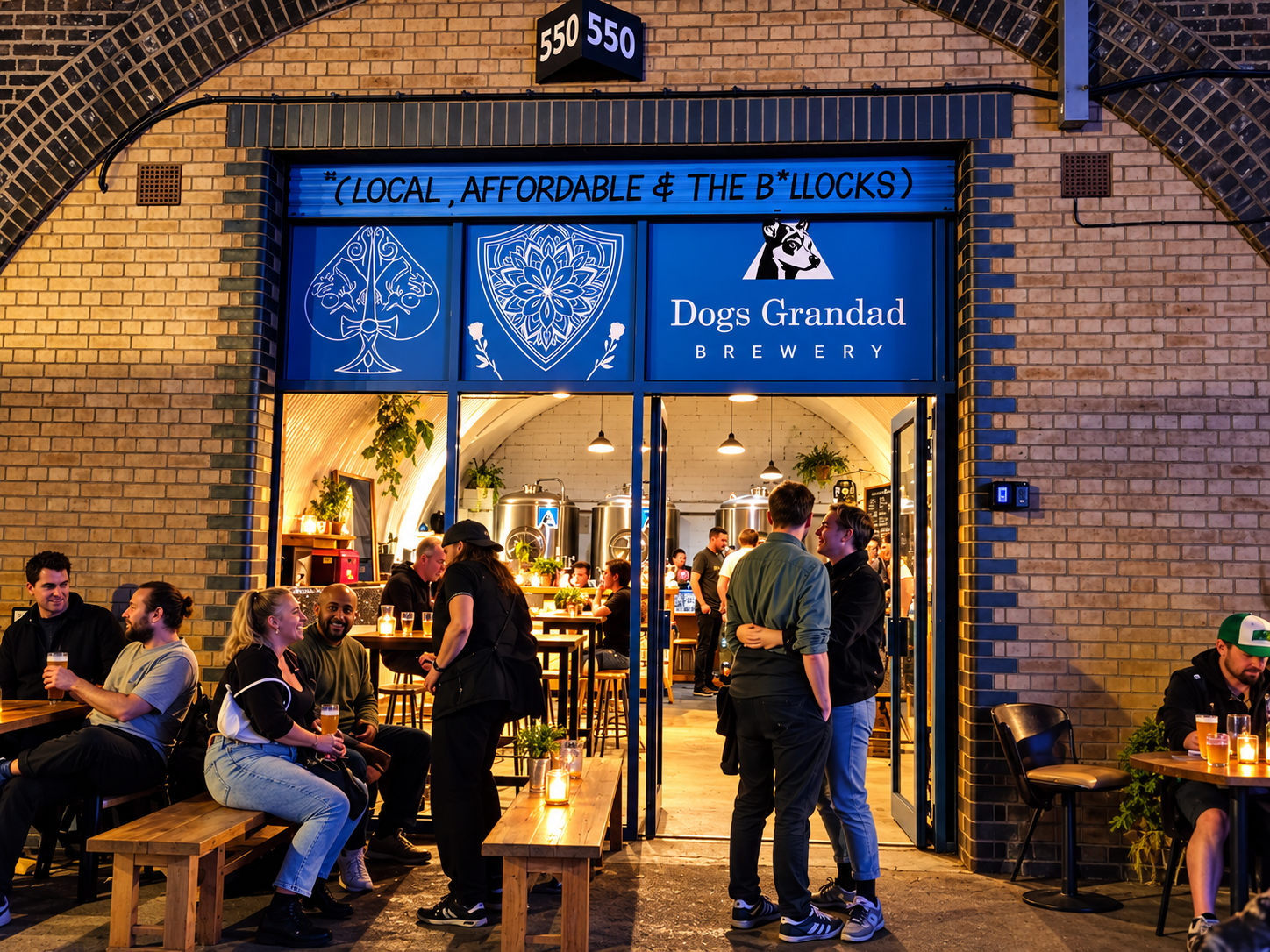
One example of a commercial change of use undertaken by Young & You involved converting existing business premises in Brixton, London, to accommodate a microbrewery and taproom.
The proposal sought to establish a premises combining small-scale beer production with a customer-facing hospitality use.
Projects of this nature can raise more complex planning considerations than straightforward changes between Class E activities.
A brewery's production element may fall within an industrial use classification, while a taproom operating predominantly as a drinking establishment may be considered sui generis.
The relationship between these activities, including their scale and the extent to which one is ancillary to another, is important when determining the appropriate planning classification.
In this instance, the premises were located within an area containing a mixture of commercial and residential properties.
Planning permission was successfully secured for the proposed use.
Why this project is relevant
The project demonstrates how introducing a specialist commercial activity can require a more considered planning approach, particularly where industrial and hospitality activities are brought together within one premises.
Case Study 2: Indoor Cricket Facility and Storage Units – Colchester, Essex
Planning permission granted | Colchester City Council
Another example from Young & You's commercial experience involved securing planning permission for a mixed commercial development in Colchester.
The approved proposal included the demolition of existing agricultural buildings and the creation of an indoor cricket facility alongside four Class B8 storage units.
The development sought to provide a new recreational facility together with commercial storage accommodation, supporting the diversification of an existing agricultural site.
An indoor cricket facility will ordinarily fall within Class E(d), which encompasses certain indoor sport and recreation activities.
By comparison, the proposed storage units fall within Class B8.
The proposal therefore involved distinct commercial uses, together with the redevelopment of the site and construction of new buildings.
Why this project is relevant
Unlike a simple change between existing Class E activities, this development required consideration of multiple planning uses alongside the proposed physical development.
It illustrates how the planning process can enable new commercial activities on rural sites where the proposals are supported by an appropriate development strategy.
What Will the Council Consider When Assessing a Commercial Change of Use?
Where planning permission is required, the local planning authority will assess the proposal against relevant national and local planning policies.
The matters considered will depend on the site and the nature of the proposed development, but commonly include:
- Impact on neighbouring properties: Whether noise, disturbance, odour or other effects could adversely affect nearby residential or commercial occupiers.
- Highways and parking: Whether the development would create additional traffic movements, servicing requirements or parking demand.
- Operating hours: Whether proposed hours of operation are appropriate for the surrounding area.
- Character of the area: Whether the new activity would be compatible with existing neighbouring uses and local planning policies.
- Economic considerations: The contribution the proposal may make to local employment, investment and the wider economy.
- Design and external alterations: Whether any proposed changes to the building's appearance are appropriate.
Not every commercial change of use will raise all of these issues, but identifying potential constraints early can help establish an appropriate planning strategy.
How Can You Check Whether Planning Permission Is Required?
Before purchasing, leasing or converting a commercial property, it is sensible to establish exactly what its existing lawful use is.
This may involve reviewing historic planning permissions, planning conditions, lawful development certificates and other relevant records.
The current occupation of a building does not necessarily establish its lawful planning use.
Where there is uncertainty, an application for a Lawful Development Certificate may be appropriate to obtain formal confirmation that a proposed use would be lawful.
If the proposal relies on permitted development rights, it is important to establish that the building satisfies the relevant legislative criteria and that any necessary notification or prior approval procedure is completed.
Finally, even where planning permission is not required, consideration should be given to Building Regulations, fire safety, accessibility, licensing and other relevant statutory requirements.
Planning a Commercial Change of Use in London or Essex?
Whether you are looking to repurpose an existing commercial property, introduce a new business use or redevelop a site for alternative commercial activities, establishing the correct planning route from the outset is important.
At Young & You, our architectural designers work alongside our in-house Chartered Town Planners to provide coordinated planning and design advice for commercial developments.
From assessing the lawful use of existing premises and identifying permitted development opportunities through to preparing and managing full planning applications, we can help you understand the opportunities and constraints associated with your property.
Considering a commercial change of use?
Get in touch with Young & You to discuss your project and how we may be able to assist.
This guide relates to planning legislation in England and reflects the position as at October 2026. The application of permitted development rights and use class legislation depends on the circumstances of each property, including any existing planning restrictions. Specific advice should be obtained before proceeding with a change of use.